Begin with the Kids age guidance
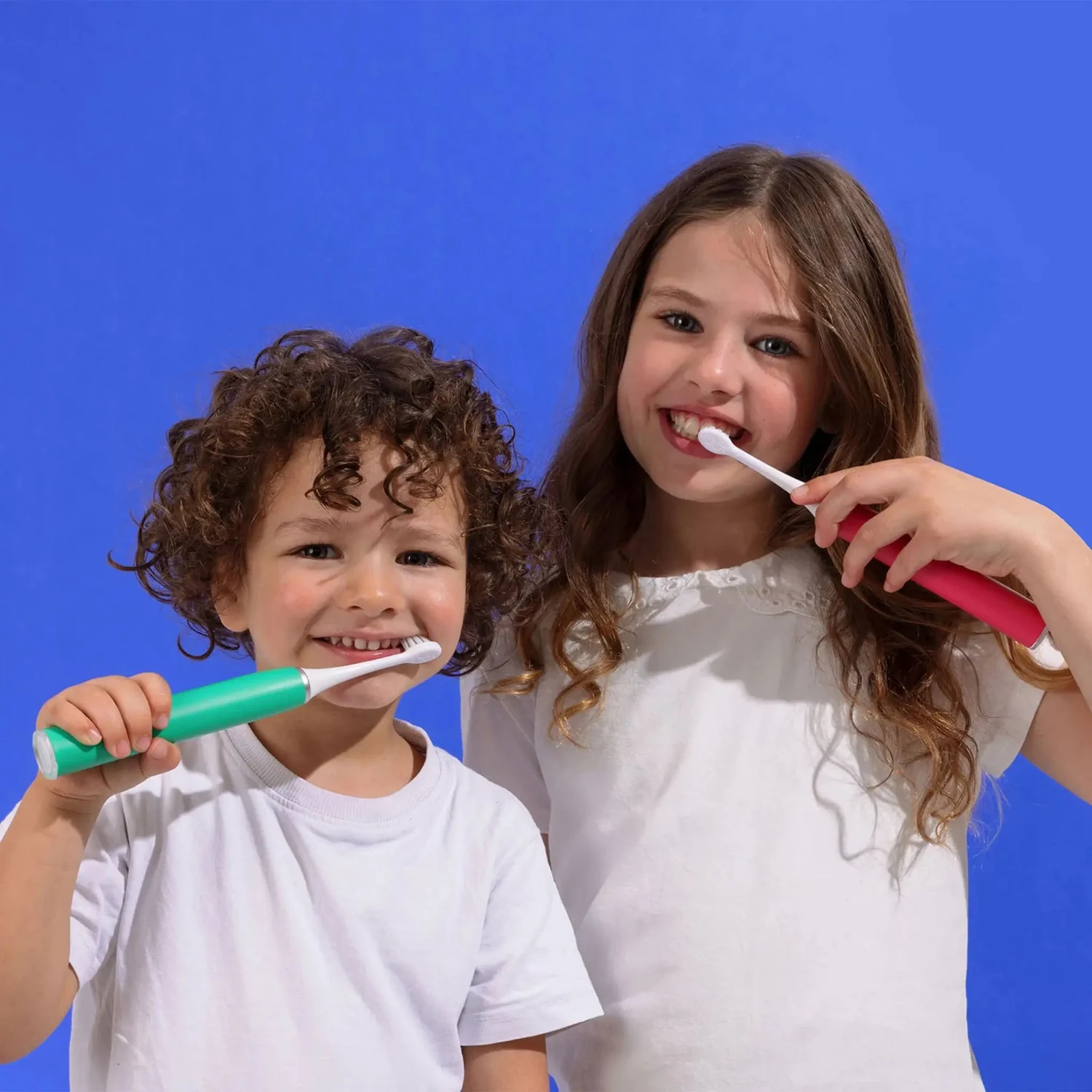
The current official FAQ recommends Kids from age three to around twelve. Treat around twelve as approximate guidance, not an automatic birthday deadline. Before setting up the routine, check that you are reading the Kids instructions and that the head belongs to the intended system. As an editorial family practice, an adult should remain involved in organising and overseeing the activity. An age range on a product cannot tell you how much help an individual child needs.
Know the two mode names
Kids has two modes. The brand describes Soft, shown in blue, for children aged three to five, and Pulse, shown in white, for children aged six and up. These are Kids settings, separate from the adult brush's five modes. Keep the official age recommendations in view while following any individual professional advice you have received. There is no need to borrow an adult-mode description to explain the child's brush, even when the handles come from the same brand.
Explain what changes in Pulse
The official FAQ gives both Kids modes 35,000 movements per minute and describes Pulse as having a larger movement than Soft. The difference is therefore not explained by a higher movement count. A simple family explanation is that the settings feel different because the movement changes. Avoid presenting a larger movement as a reward, a sign of progress or a promise of better results. The useful choice is the appropriate setting for the model and child, with the manufacturer's guidance as the starting point.
Turn the alert into a shared cue
Kids has a two-minute timer with an alert every 30 seconds. As an editorial routine, agree on a simple order before brushing and let the adult name the next section when the alert comes. You might use the same four section names each time so the language stays familiar. This is a way to organise attention together; the alert does not check technique or confirm that every surface has been reached. The adult can continue to help instead of treating the timer as an independence test.
Keep the sequence predictable
Choose a few repeatable steps around the session: identify the child's brush, check the selected mode and begin the agreed route. Afterwards, put the child's own equipment back in its usual place. These are editorial organisation ideas, not extra manufacturer requirements. If the routine becomes confusing, change one practical detail at a time so you can see what helped. A child does not need a complicated game or a different challenge every day to recognise what happens next.
Leave room for individual support
A product age range and a built-in timer cannot replace guidance for a particular child's mouth or abilities. If brushing is painful, or pain or bleeding persists, seek advice from a dental professional instead of changing modes in search of a treatment. Questions about how a Kids handle operates should go to the current instructions or manufacturer support. Keep the goal of this guide modest and useful: a clear shared routine, accurate model information and an adult who can notice when help is needed.
← Back to the journal